Tampilkan postingan dengan label Book reviews. Tampilkan semua postingan

Minggu, 25 Desember 2011

Taking a break from Patrick O'Brian and reading Raymond Chandler.

As I have mentioned earlier, I've been reading a lot of Patrick O'Brian's novels about the British Navy during the Napoleonic era, featuring Captain Jack Aubrey and the surgeon, naturalist and spy Stephen Maturin.  I would have gladly jumped straight into The Truelove after finishing The Nutmeg of Consolation, but my lovely nephew Eli asked what I wanted for Christmas and I told him I'd love the next book in the series.  (Fine lad that he is, he got me both The Truelove and The Wine-Dark Sea, both hardbound.  Thanks again, Eli.)

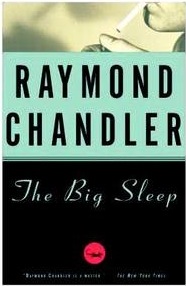
This left me with a week without any O'Brian, so I rummaged through my books and found The Big Sleep, the first novel by Raymond Chandler, probably more famous as the source material for the movie starring Humphrey Bogart and Lauren Bacall.  I thought I had read it before but I was wrong.  Almost all the characters in the book make it to the film, minus a few cops and investigators who work for the D.A., but who kills whom and why are jumbled up quite a bit.

O'Brian is like a pleasant wine enjoyed with friends, while Chandler is a bottle of rye whiskey drunk alone.  Chandler is great with surfaces.  Many beginnings of scenes feel like they could be set-ups found in screenplays. O'Brian has skill with description as well, but far exceeds Chandler when it comes to the interior lives of the characters. We get inside the heads of Aubrey and Maturin in the O'Brian novels, but only inside Marlowe's head in Chandler's work, and it is a very dark place indeed.  While Maturin's character is darker than Aubrey's, compared to Marlowe, Maturin is as cheery as Bertie Wooster. Marlowe has few pleasures and alcohol is the first and foremost, though he often regrets it long before any hangover.
The Big Sleep revolves around two sisters, Carmen and Vivian Sternwood, young, pretty, rich, spoiled and involved in pornography and drugs.  In 2011,  I couldn't read about them and not think about girls named Hilton and Kardashian, and that makes the book harder to take seriously.  At least Chandler did not have their mother pimping them out.  That would be too dark even for him. 

There were a slew of movies made from Chandler's novels in the 1940s, but the production code made it impossible to tell his stories verbatim.  There was a revival of Philip Marlowe in the 1970's, including a somewhat more accurate version of The Big Sleep.  I say somewhat because it was set in London instead of Los Angeles - L.A. is a major character in Chandler's work - and Marlowe is played by Robert Mitchum, who is twenty to thirty years too old for the part.  It is also written and directed by Michael Winner, the 1970s version of Michael Bay, the king of the hacks.

Would I recommend Chandler? I still would.  His reliance on simile and metaphor may feel cliched now, but he's the original source.  It's not his fault that so many writers that followed use him as a template, because he and James M. Cain are the most readable of the early writers whose works turn into film noir.  It's an important cultural touchstone.

That said, I will have a smile on my face when I re-board Captain Aubrey's ship.  Whatever the perils they face, there is honor and duty and friendship, as well as toasted cheese and violin-cello duets.


Selasa, 20 September 2011

Sweating the small stuff: Born to quant.


I'm about halfway through Moneyball and it's a quick and exciting read. The gift of hindsight shows some of the book's flaws impossible to detect when it was published, most notably how few of the players Billy Beane and Paul DePodesta drafted in 2003 made any splash at all some eight years later. But I am heartened to see Michael Lewis' style of writing catching on. Lewis himself gives props to Bill James, one of the first of the new breed of baseball analysts who call themselves sabermetricians. (SABR stands for the Society of American Baseball Research.) James' annual Baseball Abstracts were the great impetus for the changes in thinking about the game, and besides being a single minded collector of stats, James also knew how to bring the funny when the situation arose. (Example: writing about a heavy hitting and just plain old heavy slugger from last century: "Cecil Fielder acknowledges a weight of 261, leaving unanswered the question of what he might weigh if he put his other foot on the scale.")

And here comes to a question about education. Can you create a Matty Boy or are his kind born that way? The heroes of many of Lewis's books are a breed now known as quantatative analysts or quants. I jumped into programming when I was a lad, but I probably would have been better as a math analyst. Gathering sets of data and analyzing them comes to me completely naturally. Some people love doing that and others don't. Some can only do it on one subject (Bill James admits to no interest in numbers unrelated to baseball) but others do it about most of the things they can think of. Henri Poincaré, sometimes called The Last Universalist of mathematics and easily in any good list of the best ten mathematicians of all time, incessantly collected data sets on everything. Joseph Fourier collected number about his favorite topic, heat, and from it derived the differential equations that explain the phenomenon. Isaac Newton actually spent more time studying the Bible and alchemy than he did studying math or what we call modern physics, and it was clear he was using his stunning number sense in doing so, though he never published any of his findings in either field, instead leaving some of his thoughts in letters to friends we can read now. He probably left the religion alone because some of his ideas were heretical and heresy could still get you in big trouble - like dead - back in his day. I expect he didn't publish anything on alchemy because he didn't make any breakthroughs the way he did in math and physics, largely because it was a dry well and there were no breakthroughs to be had.

I gather numbers all the time. I'd call it "obsessively", but I have other habits that deserve to be called obsessive more than my love of numbers. Even the silly gossip blog is really an excuse to look at the supermarket rags numerically. I also spent a few seasons gathering data on football to see if I could make sense of it better than the current stat systems do. One of my ideas was to split the football team into separate squads and give credit where credit is due when points are scored, which also means blame where blame is due when points are allowed. My system was completely at odds with the modern favorite statistical game of fantasy football, since I was looking at teams rather than individuals, but I was recently heartened to see that Yahoo! has changed how defenses are measured in fantasy football and no longer blames them for points scored from turnovers like fumbles and interceptions run back by the other defense That is a small part of the system I called the Split Point System.

I did this simple quant work on football because I didn't see anyone else doing it. Reading some ideas from how quants work in baseball, (there are a LOT more people doing interesting work in baseball stats compared to football stats) I could see how to turn the Split Point System into a much better and more refined piece of work.

I'm not sure anyone actually creates a mathematician. It's like showing Edmund Hillary a mountain or giving Elvis Presley a guitar. There are things they don't know when they start, but the stage is pretty much set. I certainly still give a lot of credit to my favorite instructors like Ted Tracewell and Stu Smith, but no matter how many twists and turns my life takes, I always come back to math, and I likely always will.

Minggu, 18 September 2011

Sweating the small stuff: A mathematician reads Moneyball.

A friend has invited me to the opening night of Moneyball this upcoming Friday evening and lent me Michael Lewis' book to read. I'm not as keen on it as I was on his more recent book The Big Short, and this is because I know more about baseball history than I know about Wall Street today. Still, Lewis is an exciting writer and baseball is so interesting, even a book with flaws can be endlessly entertaining.

Let me be immodest for a moment. Lewis can appreciate math and I can actually understand it. If we compare math to its nearest (and superior) rival, he's a music critic who can write well and I'm a musician who can write legibly. It's Frank Rich vs. Salieri. It's more fun to read Rich (and Lewis), but Salieri (and I) have some inside information the other guys don't have.

No brag. Just fact.

With Moneyball, Lewis didn't start out with the intention of canonizing Billy Beane, the general manger of the dirt cheap but competitive Oakland Athletics, but that's how the book reads. In an afterword, Lewis explains that baseball insiders hate Beane for the book, not Lewis. Some of them think Beane wrote the book himself.

No one with a brain ever said baseball insiders had big brains.

And that's the point of Moneyball, much like it is the point of The Big Short and The Blind Side and most of Lewis' best-selling non-fiction. Insiders in the systems he studies don't really understand the system, and the outsiders who make honest scientific attempts to understand are widely despised.

There's the obvious and compelling core of every best-seller Michael Lewis has ever written.


Consider Billy Beane, the hero of this story. It is very common in Hollywood versions of "true stories" that the movie star is way prettier than the person being protrayed. I submit that Brad Pitt might be a little prettier than Billy Beane, but he's way too small. Young Billy Beane was a freaking Winklevoss twin, 6'4" tall, lean and supremely talented. Scouts salivate when they see a high schooler like Billy Beane.

Some may actually do more than salivate in private. I have no proof of this, but it is the strong subtext of the first few chapters of Moneyball.

Billy Beane knew the scouts of baseball didn't know shit. His best evidence was that they fought like bobcats over Billy Beane. When he became available for the baseball draft, it was either him or another Southern Californian, Darryl Strawberry, that HAD to be the first round pick that year. Strawberry became an honest to Pete baseball superstar until drugs brought him down.

Drugs weren't Beane's downfall. It was pride instead.

Beane could have played football or basketball, but he chose baseball. Beane hated to fail and hated even more to be shown up in public, and that is a nearly impossible character trait to overcome.

After they are drafted, Strawberry rises and Beane sinks, and the scouts and the best baseball minds are at a loss to know why. Beane gets violently upset when he fails, and he cannot turn this rage into positive action. Strawberry becomes a star in short order, but Beane bounces around, finally becoming roommates with Lenny Dykstra, a prospect with a tiny percentage of the promise Beane has.

The thing is, Dykstra has the small talent combined with the attitude of Babe Ruth. He ignored his failures like they didn't happen and reveled in his successes. Beane's attitude of hating failure is more like Ted Williams or Joe DiMaggio, but not quite at their godlike levels of talent.

Williams and DiMaggio truly hated to strike out, and they changed their way of batting to avoid it. Beane couldn't figure out how to avoid strikeouts and still to be feared at the plate. Had either Teddy Ballgame (good nickname) or Joltin' Joe (very inaccurate nickname) had the same "I don't give a shit" attitude about looking bad at the plate that Babe Ruth had, they might have made a serious run at the career home run record.

Neither did. Joe DiMaggio ended his illustrious career with 361 home runs, barely half of Ruth's 714. Williams, who missed prime seasons due to being a Marine pilot in both WW II and the Korean War, hit a home run in his last at bat, which brought his to a still remarkable 521 for his career.

Back to our main story.

Billy Beane, the failed Adonis, is still a baseball insider, but he listens to the baseball outsiders, the guys who think the statistics have been accurate but useless since the late 1850s.

Not a typo. 1850s. Before the American Civil War when players were not allowed to wear gloves.

I love that Lewis blames Henry Chadwick, a cricket fan from the 1850s, for inventing the "modern" baseball boxscore. There's actually a lot of math of that era that is still considered modern. The difference is that mathematical logic, group theory and quadratic reciprocity are still paying dividends, while the baseball box score is getting in the way of progress.

In Chadwick's original system, a base on balls is an error on the pitcher. Like other errors, it does not count positively towards the batter's numbers, but unlike errors, it now counts as zero instead of negative. It never occurred to him that it might be a skill of the batter to avoid bad pitches and only swing at good ones.

Some people cry in the wilderness that baseball is being mismeasured. It isn't until the 1970s that a guy named Bill James actually has the stick-to-it-iveness to shout this every year, at first to an audience of less than 100 people reading his self-published book.

In Lewis' mind, this is the beginning of baseball's salvation.

More on that tomorrow.


Minggu, 31 Juli 2011

Stuff I like: Radio On by Sarah Vowell.


I like Sarah Vowell. I've read a lot of her books and she's always informative and funny, two traits I like in people. This week I read Radio On for the first time. It's her first book, published in 1997, the edited version of a daily journal about listening to the radio in 1995.

While there is plenty of news in 1995 - the first year of the Gingrich speakership, the Oklahoma City bombings, O.J. found not guilty - much of this book is about Sarah's opinions about things. She hates Rush Limbaugh for being anti-education. She has some respect for G. Gordon Liddy for being pro-education, though when he wins an award for protecting the First Amendment when he discussed the "jack-booted thugs" of the federal agencies, she edits back in his comment about "go for the head shot", the part of the sentence the people who gave him the honor decided to edit out. She dislikes NPR news programs for being smug. She deeply detests Garrison Keillor. It's not really ironic that she would make her name on NPR because she is fascinated by Ira Glass and people involved with This American Life, the show where most people will hear her name for the first time.

A lot of the book is about opinions and feelings about music. I don't agree with everything she says, most of the disagreements being a matter of degree. For example, I never much cared for the Grateful Dead while she hates them. When Jerry Garcia dies and is given the rock and roll equivalent of canonization, Sarah writes that Deadheads are like dittoheads who don't bathe.

The opinions that make the most impression on me are her love for Kurt Cobain and Nirvana. I really liked Smells Like Teen Spirit, but I didn't hear a lot of other stuff that made an impression early. The mumbling reminded me of R.E.M., which isn't a bad thing, but I already listened to R.E.M., thanks very much. When it came to the Seattle bands, I bought Pearl Jam and Soundgarden, but not Nirvana.

Cobain's death didn't hit me that hard when it happened, probably because I was the wrong age. I was the right age to be shocked by the deaths of Jimi Hendrix and Janis Joplin, and to a lesser extent by Jim Morrison and Brian Jones. Sarah Vowell is almost exactly fourteen years younger than I am and because I respect her, I've started listening to more Nirvana, buying several songs on iTunes.

Another thing that strikes me about the book are the parallels between 1995 and 2011, especially in politics. Sarah quotes a paragraph from Rush Limbaugh denying global warming. (He may be stupid, but at least he's consistent.) Gingrich gets control of the House in the midterm election of 1994, not unlike the situation today, and he begins his campaign of intransigence, including a brief shutdown of government services at the end of 1995. We lived through that, maybe we will live through this, though it's clear Gingrich had much more sway over the Republican freshmen back then than Boehner has over the Tea Party radicals.

If you like Vowell's other books and haven't read Radio On, I recommend the book. You can see the start of her writing style and the things that influence her. She's already very funny and very opinionated, and she is already a stickler for the facts, a trait that makes her books about history so compelling. I found this oral history of 1995, the story of one woman traveling around the country and listening to the radio, a worthy predecessor to her later works like Assassination Vacation and The Wordy Shipmates.

Note: I haven't read her latest work Unfamiliar Fishes yet. Being a cheap bastid, I'm waiting for the paperback.

Minggu, 17 Juli 2011

Stuff I like: Ball FourPart 5: The real taboo topics.


I've been reading online more stuff about Jim Bouton and his book Ball Four. There were a flurry of stories last year on the 40th anniversary, and apparently nearly all is forgiven. In a post script from 1980, Bouton said he was never invited to Old Timers games, but that has changed. Now, fans give him a rousing ovation. The main reasons for the decade or more of hard feelings stem from three things in the book, worse than the profanity or discussing sex and drugs.

1. Bouton writes about money. Back before free agency, the major leagues were willing to publicize how much they paid the superstars, so the $100,000 or more contracts given to the likes of Willie Mays or Mickey Mantle or Ted Williams were in the newspapers. They did not advertise how much they were paying everybody else, and the answer was "peanuts". Bouton always drove a hard bargain in negotiations, and even though he was a 20+ game winner on the perennial World Series participant New York Yankees, he never made more than $30,000, and by the end of his career, his salary was closer to $20,000. This was a good middle class salary in the late 1960s, but ballplayers often had to deal with moving expenses when traded, or maintaining a home for the family in some town away from where the club played. In the space of one season, Bouton has to move from Seattle to Vancouver to Seattle to Houston, with his family making two of those moves, then his wife and kids going to Michigan to live with family while he plays ball in Houston. Bouton claims some credit for swaying opinion towards the players in this era just before free agency becomes the law of the land, and he might very well have a point.

2. Superstars displayed in a negative light. You might think the story about Ted Williams in the batting cage doesn't show Ted at his best, but while it shows Williams as being somewhat vain, he had plenty to be vain about. No, the meanest stories Bouton tells are about the lack of hustle in superstars like Roger Maris and Carl Yazstremski, or the stunts Whitey Ford resorted to when his fastball wasn't as scary as it used to be. These were the things many ballplayers and sportswriters really objected to.

3. Bouton and authority. In Seattle, Bouton doesn't show much respect to his superiors, but the real problem for him is that he isn't getting straight answers or the information he needs to help the team more. In Houston, his attitude improves markedly. While Harry "The Hat" Walker has a reputation as a tough guy and a screamer, most of the stories he has about run-ins with Walker end with "You know what? Harry was right." Bouton actually does respect being treated like an adult, but that treatment was rare in the major leagues back in the day, and I'm not sure how prevalent it is now. The other coach he writes about with reverence is his old pitching coach Johnny Sain, once a star pitcher with the Boston Braves. Nearly every quote of Sain's is treated as a pearl of wisdom, and Bouton is always glad to talk to him and get his advice on situations Bouton faces as he makes the transition from fastball pitcher to knuckleball thrower.

In conclusion, I'm glad I returned to this book some 41 years after I read it first. While I don't think the obscenities will be as shocking to readers now as they were then, it's still a very entertaining book that does a great job of trapping a time and place very different from the 21st Century in a snapshot, a testament to Bouton's honesty, humor and innate skills as a writer.

Kamis, 14 Juli 2011

Stuff I like: Ball FourPart 3: A short simple vignette. With obscenities.

A lot of the best stories in Ball Four are not the clever things Jim Bouton says (and he says several), but instead Bouton as reporter, re-telling the stories others tell him. Here are a few paragraphs that illustrate that point nicely.

In the bullpen tonight Jim Pagliaroni was telling us how Ted Williams, when he was still playing, would psyche himself up for a game during batting practice, usually early practice before the fans or reporters got there.

He'd go into the cage, wave his bat at the pitcher and start screaming at the top of his voice, "My name is Ted fucking Williams and I'm the greatest hitter in baseball."

He'd swing and hit a line drive.

"Jesus H. Christ himself couldn't get me out."

And he'd hit another.

Then he'd say, "Here comes Jim Bunning, Jim fucking Bunning and that little shit slider of his."

Wham!

"He doesn't really think he's gonna get me out with that shit."

Blam!


"I'm Ted fucking Williams!"

Sock!


Selasa, 12 Juli 2011

Stuff I like: Ball FourPart 2: Jim Bouton and Elisabeth Kubler-Ross


It's the rare person that would put Dr. Elisabeth Kubler-Ross' famous book On Death and Dying together with Jim Bouton's baseball diary Ball Four. Doing searches on both Google and Bing for the two names together, the only things they have in common is their best known books were published only one year apart, 1969 and 1970 respectively, and both books made the list of Books of the Century published by the New York Public Library.

So, forty one years too late, let me be that rare person. Kubler-Ross should have read Ball Four and Bouton should certainly have read On Death and Dying, because they both could learn a thing or two.


"Did you hear who died today?" In baseball parlance, that meant somebody on a major league club got sent to the minors. Jim Bouton in spring training worries about this on a regular basis. He knows he's marginal, even on an expansion team, and every pitcher sent down to the minor league Vancouver Mounties means his head has been spared from the chopping block.

But being sent to the minors isn't really death because there are way too many resurrections. No, the beginning of the book deals with the death of Jim Bouton's fastball and Bouton going through the stages of grief: denial, anger, bargaining, depression, and acceptance.

Early in the book, he hopes his new pitch the knuckleball will be a strong set-up for his fastball, putting hitters off guard. Every once in a while, he writes that his arm feels like it did four years earlier when he was still a guy who blew the third strike past over-matched major leaguers. He looks at other pitchers and thinks he has to be better than them, especially Steve Barber who never gets and work and is always in the training room. His anger and depression are mainly focused on his immediate superiors, pitching coach Sal Maglie and manager Joe Schultz, neither of whom has Bouton's complete confidence or respect.

Though he isn't cut in spring training, a few weeks into the season, Bouton "dies" and is sent to Vancouver. There he has success with the knuckleball, and finally he finds acceptance. His fastball is dead. He is a knuckleball pitcher, hoping to emulate the success of Phil Niekro and Hoyt Wilhelm. Someone tells him his knuckler moves faster than Wilhelm's, and he credits his old fastball technique for the difference, though he knows throwing a real fast ball hurts like hell and the knuckler takes almost nothing out of his arm.

The change in Bouton's attitude from the beginning of spring training to the time he is resurrected to the big leagues is remarkable, and the five stages of grief can be seen touching all the bases.


Senin, 11 Juli 2011

Stuff I like: Ball FourPart 1: Introduction.


I've been doing a lot of review recently, watching movies and TV shows I liked when I was younger, re-reading favorite books. This week, I was able to get Ball Four by Jim Bouton out of the Oakland Public Library, opening the pages again forty one years after it was first published. It was a must-read book for any teenage boy in 1970 who liked sports even a little bit. Two friends of mine from high school, Andy and Steve, sometimes check in on the blog. They both read it back in the day. We talked about it for weeks. I would overhear conversations in the hall and on the school bus between guys I barely knew, and I'd hear them repeat stories and jokes from the book. We didn't use the phrase "water cooler material" back then, but that's what Ball Four was for adolescent males in 1970, provided your parents let you read it.

The book is the diary of Jim Bouton recounting his 1969 season playing for several teams, both in the majors and in the minors. Sports diaries had been published before, but Ball Four was significantly different in two major ways.

1. Bouton had been a top pitcher for the Yankees, but when this book is written, he is nearly washed up and struggling to make the club on The Seattle Pilots, a first year expansion team. (The team didn't work out in Seattle and move to Milwaukee the next year, changing the name to the Brewers.) Most diaries before this were by stars or superstars on winning teams, often teams that won the pennant in the year in question.

2. Bouton told the truth. He told about all that he saw that he found interesting: the funny, the petty, the ridiculous, the crude. Like other adolescents loved Catcher in the Rye for its raw language, my friends and I loved Ball Four, not only for the jokes and new permutations of obscenities, but for the stories it told and the characters we met.

I'm only about a quarter of the way through, but it's a quick read and I should be finished soon enough, probably by the weekend. I can honestly say I am getting more out of it now with the gift of hindsight than I did when I first read it when it was fresh.

When I was a kid, I thought it was funny and I still do. This may be because my sense of humor is still at the stunted adolescent level, I can't be sure. Here's a way to test yourself. Sing the following lyric.

Summertime.... and your mother is easy.

If you laughed at that, you'll laugh at Ball Four.

But the big thing is that when I was a kid reading about the escapades Bouton the adult and his teammates, the emotional tug wasn't the same as it is now that I'm a man far past the age of thinking about breaking into the majors, reading the words of a man in the twilight of his career.

In any case, get ready for about a week of posts about Ball Four, a honest book about flawed people, including the author, disguised as a filthy, funny book about sports.

Jumat, 01 April 2011

Starter's block.


It's been over two weeks since I finished Hampton Sides' true crime thriller Hellhound On His Trail, the story of the escaped convict James Earl Ray, who in 1968 killed Dr. Martin Luther King, Jr. in Memphis and eluded capture for about two months until apprehended in London, England by New Scotland Yard.

The thing is I've had a hard time starting this post. My goals are these.

1. Make it clear I liked the book very much.
2. Discuss several aspects of the book without giving the whole thing away.
3. Not to spend an entire day typing a blog entry as long as Dr. King's letter from a Birmingham jail.

I've gone through a lot of ideas about how to structure this. Let me list a few.

Compare and contrast with In Cold Blood. It's an obvious starting point. Like Capote's great "true crime novel", Sides follows a lot of threads. Of course he follows James Earl Ray, known for most of the book as Eric Stavro Galt, his main alias after escape from the Jefferson City penitentiary, also known as Jeff City, but he also tells the story of what King was doing before he was killed and what his organization did after the assassination. Sides also discusses the 1968 presidential run of George Wallace, the openly racist former governor of Alabama that Ray admired. But after the killer and the killed, the third main character that is never far away is the F.B.I., the agency tasked with catching the murderer of a man J. Edgar Hoover detested.

But comparing it to In Cold Blood would mean a lot of time writing about Capote's book, and like this book, if you pull on one thread, suddenly you've spent a few chapters discussing all the aspects.

The F.B.I. in war and peace. It's hard to remember just how much power J. Edgar Hoover wielded for how long a period a time now that he is gone and has become a figure openly mocked as either a latent homosexual by his defenders (if the species still exists) or a closeted practicing homosexual by his detractors, also known as right thinking Americans. For all his paranoia and other personal weaknesses, he was a tireless advocate for modern forensic science and turned the Federal Bureau of Investigation into one of the most effective law enforcement agencies in the world. Hoover hated King for two main reasons, only one of which was true. He hated King because he thought he was a communist and he hated him because he knew he was an adulterer. When Ray escaped Memphis after the murder, he was only able to do so by ditching the murder weapon and a lot of other incriminating evidence that would eventually cut through the thicket of aliases he used. He then became a federal fugitive and the case was under the jurisdiction of the F.B.I., an organization that hounded Dr. King relentlessly and hoped to send him into a depression that might turn suicidal. If the F.B.I. didn't catch the killer, there would be a large part of the public that would assume someone inside the agency did it.

Sides' book shows both sides of the Bureau, the loyalty to a paranoid getting worse with age and a modern law enforcement agency with serious pride in their often immaculate work. The case is a real whodunit and getting to the truth through all the false leads and Ray's natural abilities to avoid detection with what now feel like Stone Age forensic tools makes for fascinating reading. They had good prints very early on, but back then it meant going through a database of millions of prints by hand. When the search determined that the suspect was likely an ex-con or escaped con, that cut the database from millions to tens of thousands, but the computers of those days would be no help at all in the search.

What to do with the conspiracies: American assassinations from the 1960s and conspiracies go together like red beans and rice, but Sides was not convinced by any of the conspiracy theories he read when doing his research. Ray did have money after he escaped, enough to pay cash for a used Mustang and travel to Mexico, Los Angeles and New Orleans before he started his hunt for King, but there is no evidence he held down a job during this time. Sides posits that he could have put money away from jobs he pulled before going to jail or saved money he made selling drugs in prison. From Sides' point of view, the most likely conspirators are Ray's brothers Johnny and Jerry, both of whom also had criminal records and antipathy towards blacks. One brother visited him at Jeff City the day before the future assassin made his escape.

So those were my ideas of how to write this thing and cobbling them together helped me get through it. Let me close by saying Hellhound On His Trail is a well-paced and well-researched book, better paced than this review most certainly. As long as a reader can accept a lack of conspiracy theories in such a story, this book will be enjoyable as well as informative.

Jumat, 04 Maret 2011

Book review: The Big Short by Michael Lewis


Back in the 1980s, Michael Lewis went straight from Princeton to Wall Street, though his degree had nothing to do with finance. His lack of expertise did not hurt his career, but he quit the field just a few years later, much wealthier and terrified as hell. He turned his experiences into the book Liar's Poker, and in the bargain found a calling better suited to his talents, writing non-fiction best sellers.

Not without cause, Lewis thought he was watching an industry headed for an apocalypse and right soon. Conservative sectors of the financial industry were going nuts in the 1980s, due in no small part to de-regulation. He was in the game when the previously dull and solid savings and loan industry crashed, and he worked at Salomon Brothers, the first investment bank to go public. This meant the owners were no longer gambling with their own money, but instead with the money of the stockholders. Old timers were appalled, but it wasn't really the end of the world, even though some big names went to prison, including Michael Milken, Charles Keating and John Gutfreund, Lewis' former boss at Salomon Brothers.

No, the real crash of the financial industry was still about twenty years in the future, and when it came, Lewis decided to write an article about it for the now defunct Portfolio magazine, and then expand the shorter piece into the book The Big Short.

While Liar's Poker was kind of a bug's eye view of the financial world because Lewis was such a little fish, The Big Short is more like a worm's eye view. Because of non-disclosure agreements, it's hard to get the people at the top to talk. He did get some valuable information from insiders who saw the trouble in subprime loans early like Meredith Whitney, Steve Eisman and Greg Lippman, but a lot of the narrative of his book follows some very small fish indeed, investors local to the San Francisco Bay Area instead of New York. (Lewis lives in Berkeley.) These outsiders saw that if it was possible to bet against the loans being made by subprime lenders, the odds were massively in their favor.

Home ownership used to be straightforward. Get a down payment together, show proof of income and a solid credit rating and you could have your piece of the American Dream. That, of course, was in the quaint 20th Century. With sub-prime lending, down payments and proof of income would vanish as criteria and all that remained was your credit score. The thing was, it was pretty easy to go from no credit history to good enough to get a loan in a matter of months by getting a single credit card and paying off the entire balance every month. Lewis tells the tale of a migrant worker making $14,000 a year picking strawberries getting approval for a home loan of over $700,000.

You might argue the strawberry picker was an idiot, and I wouldn't disagree. But what about the idiocy of the company that made the loan? How can they possibly turn a profit on this? Lewis does a good job explaining this as well. A lot of subprime companies made the loan, got the points up front off the not really credit worthy buyer then sold the loan immediately.

Okay, you might say, but who's a big enough idiot to buy the loan? The loans were based on teaser rates and balloon payments. Maybe the strawberry picker could make the teaser rate payments, but he'd probably not be able to continue two years later when his monthly payment blew up. No matter, thought the alleged non-idiots taking the gamble on him. If he keeps paying, fine. If not, his house value probably went up, then he could re-finance. Worst case scenario, the company buying the loan now could foreclose and they owned a house, an alluring piece of the American Dream they could sell for a profit.

They could see no way this well-thought out plan could fail.

They couldn't, but others could. The thing was, to bet that the housing market was really a massive bubble, you needed to enter the bond market. Some people might think the stock market is a place where the big fish eat the little fish, but the stock market is to the bond market as a well maintained aquarium is to the deep blue sea. With exotic bonds like the Credit Default Swap (CDS) and the even more arcane Collateralized Debt Obligation (CDO), it was nearly impossible to know exactly what you were buying and even the alleged "experts" couldn't agree on what the things were worth. There's a very funny scene where Lippmann from Deutsche Bank, the biggest fish Lewis could talk to who bet against the CDOs, calls up his counterpart at Morgan Stanley, who thought the incredibly bad loans in the obscure package really deserved a triple A rating. The deal was set at 100. Lippmann's model said they are worth 72. The person from Morgan Stanley counters that their model put the value at 95.

"Fuck your model," Lippmann patiently explains. "If you really think they are worth 95, I will sell them to you at 77. Otherwise, dude, you owe me $1.2 billion, and I want it fucking now!"

Of course, this was not the end of the conversation. Lawyers stepped in and eventually Morgan Stanley paid Deutsche Bank half that amount, $600 million, for being on the wrong side of a tiny part of the biggest bet in the history of the world.

The Big Short is supposed to be the story of gamblers in a zero sum game, which means for every dollar one gambler might make, someone else at the table has to lose a dollar. But here's where the story gets scary. A single loan could be repackaged again and again into derivatives like CDSs and CDOs, and the amount of money actually tied up in home loans that wouldn't get paid off was a tiny fraction of the money floating around in the casino that every major player in the financial world was gambling in. Some were on the right side but many on the wrong side so deep, bankruptcy was their only option and the winners wouldn't get paid off.

Like I said, it's supposed to be the story of gamblers. The main characters in the book are smart guys on the right side of the bet like Dr. Michael Burry, an obsessive researcher who stopped being a surgeon to become an investment advisor, and Charlie Ledley and Jamie Mai, a couple of neighbors in Berkeley, California who started Cornwall Capital and dove bravely into the bond market, only to be mocked by the big fish with whom they swam as Cornhole Capital. But all the good guys get their bets paid off, and so do all the idiots, only two of whom are featured prominently by name, Howie Hubler at Morgan Stanley and a CDO manager named Wing Chau. All of them get paid off because of the massive bailouts of the financial sector under presidents Bush and Obama, engineered by the scum in charge Ben Bernanke and Tim Geithner.

While I have mentioned many of the plot points, there's plenty I haven't talked about, and The Big Short is still a ripping good read, largely because Lewis is a better writer than I am. While there is a good chance you will finish the book either somewhat depressed or pissed off as hell, I still recommend you read The Big Short. The sad moral is that the idiots and thieves are still in charge up and down the line, and you can see in slow motion the post mortem of the last train wreck they caused while waiting for the next one.

Rabu, 22 Desember 2010

Is it me or is it them (or him)?


In the spirit of "Ok, I'll give it a try", I got the first DVD of the first season of Modern Family from Netflix because I had heard so many positive reviews.

I made it through five episodes and turned it off.

For good.

This is embarrassment comedy. I hate embarrassment comedy. Characters you are supposed to like are there to embarrass themselves over and over and over until something allegedly funny happens. That is the modus operandi for the fat kid in the family on the left, the dad in the family in the middle and the fat gay guy on the far right.

There are some good comedies in the past that went too far down that road and pulled out of the tailspin. I remember when I used to watch The Odd Couple when I was a kid and for what seems like about half a season, every episode would end with Felix not having a shred of dignity left. Too many George Costanza focused episodes on Seinfeld were that way and I stopped watching when the show originally aired, though I came back to it in re-runs.

I doubt I'm coming back to Modern Family. It's just painful to watch for me, but I will admit it's my prejudices that make it unacceptable.


On the other hand, when dealing with harrassment, the law takes into account the allegedly reasonable hypothetical person.

I believe the allegedly reasonable hypothetical person reading David Mamet's Bambi vs. Godzilla will finish the book in a near suicidal depression.

If the deeply unhappy Mr. Mamet ever commits himself, any competent mental health professional will take away his belt, shoelaces and anything sharper than a plastic pocket comb.

I've known a few writers from Hollywood, and they are an embittered bunch, not without cause. But Mamet turns cynicism and disillusion into an Olympic sport in this book. He's written and directed some of my favorite movies of the past twenty five years, but apparently it is all ashes in his mouth, which he gladly shares with anyone who is fool enough to venture into spitting range.

Let me share with you the best thing in this book. Technically, since it's a cover blurb, it's not in the book, but it's the line that drew me in, and I repeat it here to keep others from making the same mistake.

"David Mamet is supremely talented. He is a gifted writer and observer of society and its characters. I'm sure he will be able to find work somewhere, somehow, just no longer in the movie business."
-Steve Martin

Avoid this book at all costs. Your mental health is too valuable and so is your time.

Kamis, 25 November 2010

Recommending a review of Decision Points


I haven't read George Bush's memoir Decision Points. I have little interest in doing so.

I've never been to Iraq, and I also have little interest in the trip. Unlike John McCain, if I went I would not be protected by a battalion of armed troops, so I would be worried for my safety. I am not the specific American who turned their country into an open air slaughterhouse, but I am an American, and some Iraqis might understandably consider that reason enough to mean me harm.

George Packer of The New Yorker has read Decision Points, has been to Iraq and knows the history that Bush tries to gloss over much better than Bush ever could, given his psychological foibles. Packer's review of the book is an interesting read and I recommend it.